
Germany wants independence from Russian nuclear fuel, using Rosatom as a bridge
Europe’s effort to break its dependence on Russian nuclear fuel has a paradox in Germany: making Russian-designed fuel without buying it from Russia ...
News
Publish date: September 8, 2011
Translated by: Maria Kaminskaya
News
An August 18 statement by Gazprom assures that “special attention was given to issues of ecological safety during the construction of the Prirazlomnaya.” But the statement has failed to alleviate concerns among environmentalists, who believe that a substantial list of questions regarding Russia’s drilling in the Arctic remains unaddressed.
At this time, the world has yet to offer any technologies or equipment capable of efficiently cleaning up oil spills at sea in ice conditions – not even spills of a lesser scale than the production volumes expected at the Prirazlomnaya site, environmentalists say.
“In our opinion, the main problem with the project of development of the Prirazlomnoye field is the lack of preparedness to handle oil spill accidents,” environmentalists say.
Cleanup measures provided for in the project are only designed to handle spill volumes not exceeding 1,500 tonnes – whereas the platform will be able to hold up to 120,000 tonnes of oil at any given time. The infrastructure to handle spills of greater volume is located in Murmansk – some thousand kilometres from the Prirazlomnoye deposit.
Another serious problem with the Prirazlomnoye safety assurance, environmentalists believe, is that the project has been conducted with the almost total absence of public scrutiny. None of the attempts made via the avenues afforded by the law to have the project operator provide documentation about the company’s readiness to handle oil spills in ice conditions have been successful.
Furthermore, the start of drilling operations at Prirazlomnaya goes contrary to the instructions issued by President Dmitry Medvedev to the Russian government last June 9, at a meeting which discussed issues of guaranteeing ecological safety in oil and gas field development and production and transportation of hydrocarbons on the continental shelf, including by ensuring financial support for cleanup operations and by establishing special regimes of use of natural resources in the Arctic zone of the Russian Federation – such that would not permit production of oil in ice conditions without the operators’ demonstrating they have tried and tested methods of cleaning up oil spills from under the ice.
No less importantly, the economic advisability of drilling for oil and gas in the Arctic warrants further substantiation. The production efficiency potential offered by wells already under development, as well as by oil refineries, is much higher than what could be extracted out of the as yet undeveloped oil deposits on the Arctic shelf.
A coalition of Russian environmental NGOs – the Russian Bird Conservation Union, WWF Russia, the Socio-Ecological Union, Greenpeace Russia, and Bellona-Murmansk – is thus appealing to Prime Minister Vladimir Putin with a open letter urging the government to:
– halt all further works on installing the Prirazlomnaya drilling rig until President Medvedev’s June 9 instructions to the government have been followed through;
– guarantee open access to information about the project;
– conduct open and comprehensive discussions about the environmental safety of the project, and its significance for the goal of steering Russia from being a raw-material economy to a development path based on innovation.
The coalition has prepared an open letter to Prime Minister Vladimir Putin (downloadable in Russian to the right) and has begun to collect signatures.
Sign the appeal to Putin to defend the Arctic.
Europe’s effort to break its dependence on Russian nuclear fuel has a paradox in Germany: making Russian-designed fuel without buying it from Russia ...
Nearly four and a half years after Russia’s full-scale invasion of Ukraine, July offered fresh evidence of how difficult it remains to disentangle Ru...
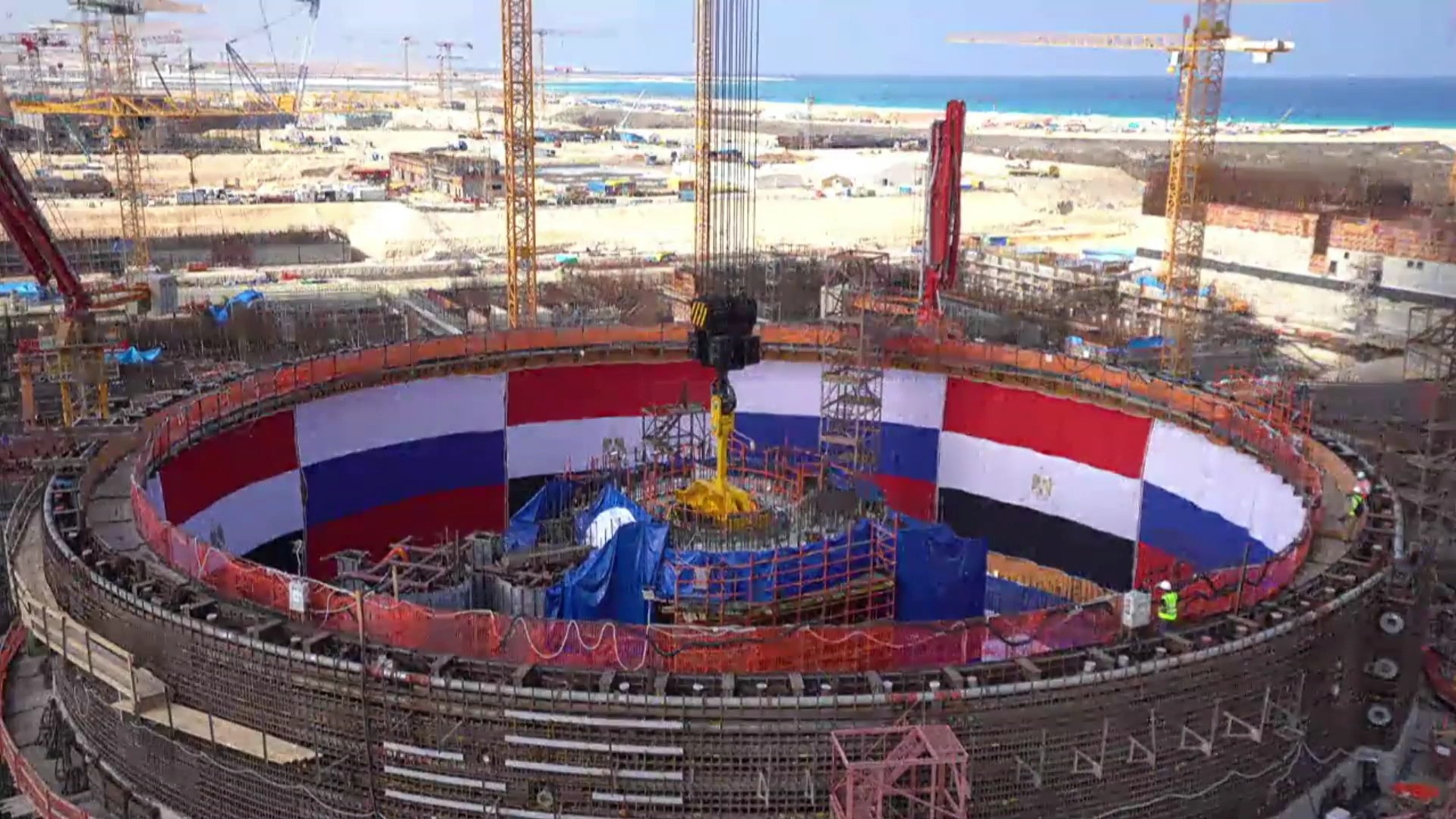
Just days after Egyptian nuclear authorities reportedly accused Rosatom of construction defects, poor management and vi...
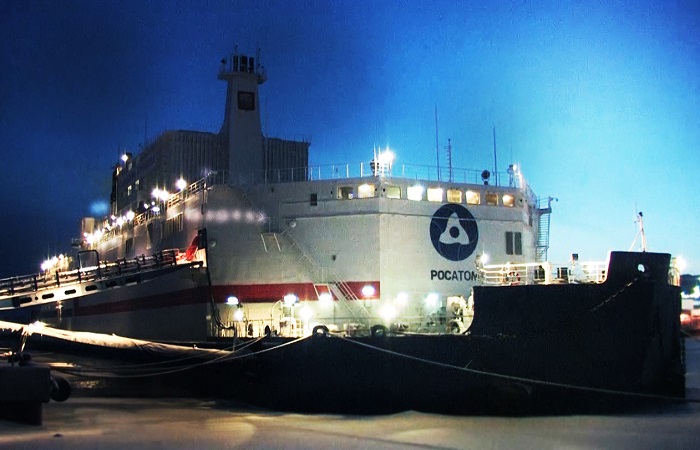
For years, the Akademik Lomonosov looked like one of the nuclear industry’s more eccentric experiments: two reactors mounted on a barge and tow...