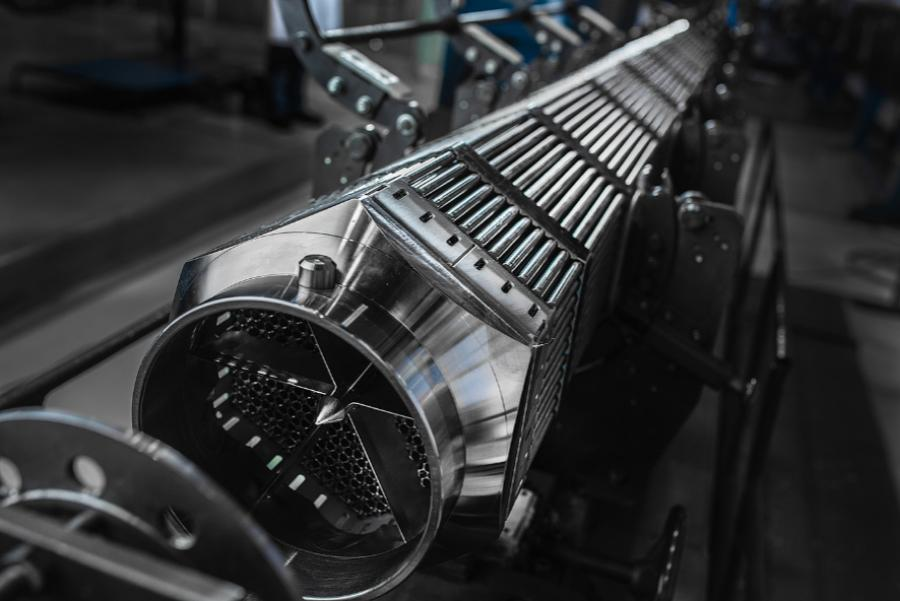
Germany wants independence from Russian nuclear fuel, using Rosatom as a bridge
Europe’s effort to break its dependence on Russian nuclear fuel has a paradox in Germany: making Russian-designed fuel without buying it from Russia ...
News
Publish date: March 1, 2010
News
In a previous report, McKinsey & Co. produced a model which assessed the effectiveness of existing and proposed climate change regulations on reducing global greenhouse gas emissions. The results drew attention to the fact that much more work is required to prevent the average global temperature from rising by more than 2ºC, in accordance with recommendations made by the Intergovernmental Panel on Climate Change (IPCC).
“A detailed assessment of all regulations proposals from Annex I and non–Annex I countries currently on the table shows that the world will be able to realize only about half of the emission reduction potential required to limit global warming to two degrees”, explains the article, referring to their previous report.
Carbon markets in the form of emission trading schemes and carbon offsetting initiatives are two interrelated measures being used to respond to global warming and looming emission targets.
When considering both measures, the article highlights the problem of relying solely on an emissions trading scheme with remarkably low carbon prices to drive emission reductions and argues that additional measures are needed.
“Emission caps and related carbon trading in developed nations are a very effective way to reduce carbon emissions if supported by other forms of regulation, such as energy efficiency standards”, reads the article.
The article also highlights the possibility that carbon markets in developing nations – in the form of carbon offsetting – may not be as successful as could be expected, given the high level of uncertainty perceived by investors following the UNFCCC climate talks in Copenhagen.
“Companies are likely to move away from projects that rely completely on demand for offset credits as their income stream — such as the reduction of emissions from cooking stoves. Instead, they will look for projects with other income streams, such as government subsidies”, concludes the article.
Read the full McKinsey & Co. article here.
Europe’s effort to break its dependence on Russian nuclear fuel has a paradox in Germany: making Russian-designed fuel without buying it from Russia ...
Nearly four and a half years after Russia’s full-scale invasion of Ukraine, July offered fresh evidence of how difficult it remains to disentangle Ru...

Just days after Egyptian nuclear authorities reportedly accused Rosatom of construction defects, poor management and vi...

For years, the Akademik Lomonosov looked like one of the nuclear industry’s more eccentric experiments: two reactors mounted on a barge and tow...