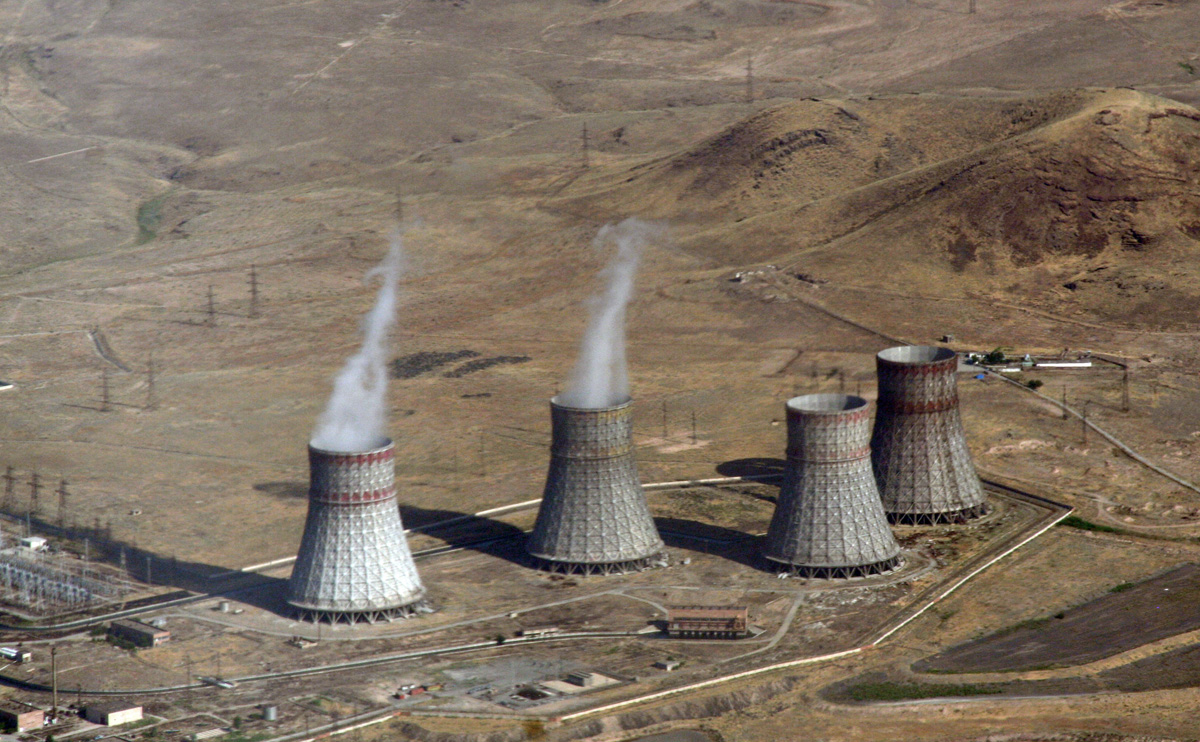
Armenia reconsiders nuclear future as Rosatom offers replacement for aging Soviet reactor
Armenia is reconsidering its plans for a new nuclear power plant after a fresh proposal from Russia’s state nuclear corporation Rosatom and a s...
News
Publish date: December 19, 2007
News
The state-run corporation has developed a new type of fuel assembly- the TVS Kvadrat – for use with reactors typically used in the West. The contracts are slated to be signed in early 2008.
TVEL, which accounts for 17 percent of the global nuclear fuel market, intends to almost double its share by 2030.
The company – which will soon become part of the Russian nuclear behemoth state corporation Atomenergoprom, which will oversee every aspect of the Russian nuclear fuel cycle, including oversight – has developed a new type of fuel assembly, the TVS-Kvadrat, for use in Western-type nuclear reactors.
"We plan to sign an agreement with General Electric to promote our fuel on the U.S. nuclear power plant market," TVEL President Yury Olenin said in a statement.
"We believe the situation is ripe for a major breakthrough on the U.S. market."
General Electric would license the Russian nuclear fuel in exchange for receiving TVEL’s technology, he said
Olenin was also upbeat about prospects for European markets, saying TVEL had received technical documents for fuel licensing from a European company, but did not specify the company’s name.
Olenin expressed optimism about TVEL’s prospects in European markets, saying the company TVEL received technical documents for fuel licensing from a European company, but declined to name the company, RIA Novosti said.
TVEL’s TVS-Kvadrat will undergo pre-reactor testing for three years, which will be followed by another three years of operation tests in a European reactor, which Olenin said had already been selected. The agreement with the European company could be signed in February 2008, Olenin said.
"We plan to attain a 30 percent share of global nuclear supplies, which in effect means leadership," he said.
Olenin said the company was seeking to bring in an additional 5.3 billion roubles ($215 million) with world market innovations and by opening new markets.
TVEL-produced fuel currently runs 73 commercial and 30 research reactors in 13 countries worldwide.
Armenia is reconsidering its plans for a new nuclear power plant after a fresh proposal from Russia’s state nuclear corporation Rosatom and a s...

Russia’s state nuclear corporation Rosatom has taken full control of one of the country’s largest logistics companies, consolidating an expanding tra...
August brought signs of growing pressure on several fronts for Russia’s state nuclear corporation Rosatom, from questions surrounding major construct...
The International Atomic Energy Agency has suspended one of its most senior Russian officials — but for reasons largely unrelated to the questions ab...