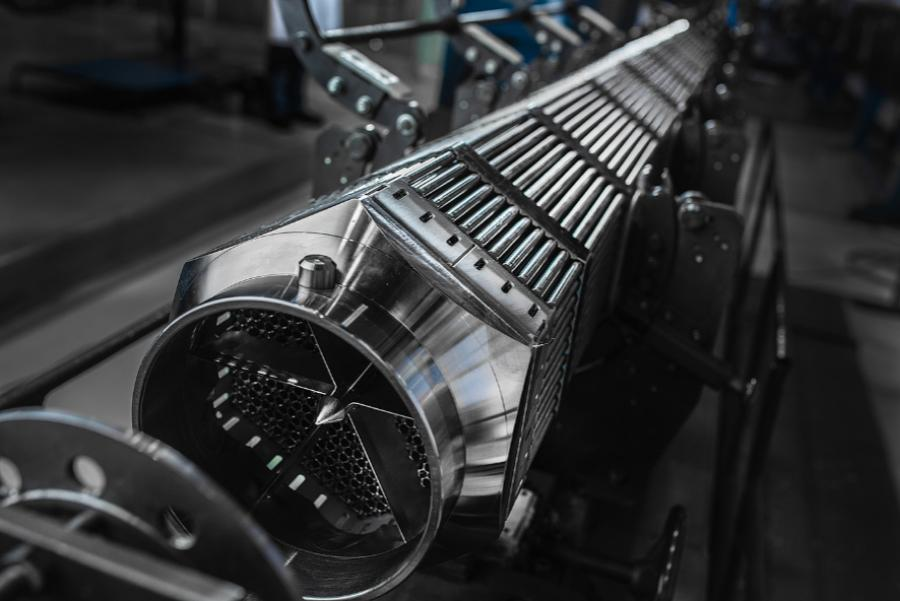
Germany wants independence from Russian nuclear fuel, using Rosatom as a bridge
Europe’s effort to break its dependence on Russian nuclear fuel has a paradox in Germany: making Russian-designed fuel without buying it from Russia ...
News
Publish date: August 7, 2026
News
Russia’s war against Ukraine continues to reshape the global nuclear industry in ways that extend beyond the battlefield. Western governments are investing in uranium enrichment capacity to reduce dependence on Russian nuclear fuel, operators of Soviet-designed reactors are discovering that decades of technological ties to Rosatom cannot be severed overnight, and Ukraine’s occupied Zaporizhzhia Nuclear Power Plant (ZNPP) remains caught in a conflict that increasingly threatens not only its present safety, but its long-term future.
These three developments dominate Bellona’s June Nuclear Digest, underscoring how nuclear security, energy policy and geopolitics have become increasingly entangled.
Urenco announced in June that it will launch a second major expansion of its uranium enrichment facility in Eunice, New Mexico, adding another 2.1 million separative work units (SWU) of annual capacity by 2036. The project is part of a broader effort to expand enrichment capacity across the United States and Europe as Western governments work to reduce their dependence on Russian fuel services.
Today, the Eunice facility remains the only commercial producer of low-enriched uranium in the United States. Washington is simultaneously investing in several domestic enrichment projects, but Bellona argues that rebuilding the country’s nuclear fuel supply chain will remain a lengthy process.
According to Bellona nuclear expert Dmitry Gorchakov, Urenco has quietly become indispensable to the American market. The company now supplies about 70 percent of U.S. demand for enriched uranium, with roughly 30 percent coming from its U.S. facility and up to 40 percent from its European plants. Imports from Urenco’s facilities in the United Kingdom, Germany and the Netherlands accounted for 57 percent of U.S. enriched uranium imports in 2025—more than twice Russia’s 24 percent share. Even if Washington succeeds in building significant domestic enrichment capacity, Gorchakov concludes, the United States is likely to eliminate Russian supplies “primarily thanks to Urenco.”
The announcement illustrates that reducing reliance on Rosatom is no longer simply a question of finding alternative suppliers. It requires rebuilding industrial capabilities that much of the West allowed to atrophy over several decades.
Developments in Bulgaria, Slovakia and Armenia demonstrate that moving away from Russian nuclear technology is proving far more complicated than replacing fuel contracts.
In Bulgaria, the Kozloduy Nuclear Power Plant once again received exemptions from European sanctions allowing continued imports of certain Russian equipment because key components of its Soviet-designed systems still lack suitable alternatives. At the same time, Czech and Ukrainian firms continue modernizing reactor control systems that should eventually enable further diversification.
Slovakia’s fourth Mochovce reactor has now been loaded with fuel, but despite extensive Western participation in completing the project, the unit will initially continue operating on Russian fuel while Westinghouse and Framatome complete licensing of replacement fuel.
Armenia presents an even more politically sensitive case. While the European Union continues financing safety upgrades and alternative emergency systems at the Armenian Nuclear Power Plant, Moscow has openly criticized Yerevan for employing Western contractors without Russian coordination and has warned that doing so could jeopardize Rosatom’s safety guarantees. Taken together, Bellona’s Dmitry Gorchakov says, these cases demonstrate that dismantling decades of cooperation in the VVER reactor sector is proceeding “very unevenly and not without difficulties.” Bulgaria still requires repeated sanctions exemptions because some equipment “cannot be qualitatively produced by alternative suppliers,” while Slovakia’s transition to Western fuel is progressing “not as actively” as in countries such as Finland or the Czech Republic. Armenia, meanwhile, reveals that diversification has become more than a technical issue. Russia’s sharp reaction to Western involvement shows that, for Moscow, the issue is “not simply a technical or economic question, but a question of losing political influence in an important region.”
Military threats around the occupied Zaporizhzhia Nuclear Power Plant continued throughout June. The station remained dependent on a single backup transmission line after its main external power connection stayed out of service, forcing four separate switches to emergency diesel generators during the month. Drone activity repeatedly disrupted repair work, while IAEA inspectors continued to face restrictions on access to important areas of the site.
Elsewhere in Ukraine, a drone strike damaged a building at the Central Spent Fuel Storage Facility in the Chornobyl Exclusion Zone, only a short distance from stored spent nuclear fuel. Although no radioactive materials were released, the incident underscored the vulnerability of civilian nuclear infrastructure far beyond Zaporizhzhia itself.
For Bellona’s Alexander Nikitin, however, the central question is no longer simply whether Zaporizhzhia can avoid a nuclear accident while the war continues. Rather, he argues that the station is likely to be “destroyed to such an extent” that, regardless of who ultimately controls it, operating Europe’s largest nuclear power plant will become “impossible without extensive reconstruction.” The greatest danger, he warns, remains the possibility that damage to nuclear facilities or radioactive materials could result in radioactive releases beyond their protective barriers.
The attack near the spent fuel storage facility also illustrates a broader lesson. As Nikitin observes, if “tomorrow a stray shot or strike” were to hit an inadequately protected spent fuel storage installation, the consequences “could be very real and extremely severe” for both people and the environment. The war has demonstrated that even nuclear facilities far from the front cannot be assumed to be immune from attack.
More than four years after Russia seized Zaporizhzhia, Bellona argues that the challenge is no longer limited to preventing a nuclear disaster in the present. Increasingly, it is about whether Europe’s largest nuclear power station—and Ukraine’s broader civilian nuclear infrastructure—will emerge from the war in a condition that allows them to operate safely again.
Europe’s effort to break its dependence on Russian nuclear fuel has a paradox in Germany: making Russian-designed fuel without buying it from Russia ...
Nearly four and a half years after Russia’s full-scale invasion of Ukraine, July offered fresh evidence of how difficult it remains to disentangle Ru...
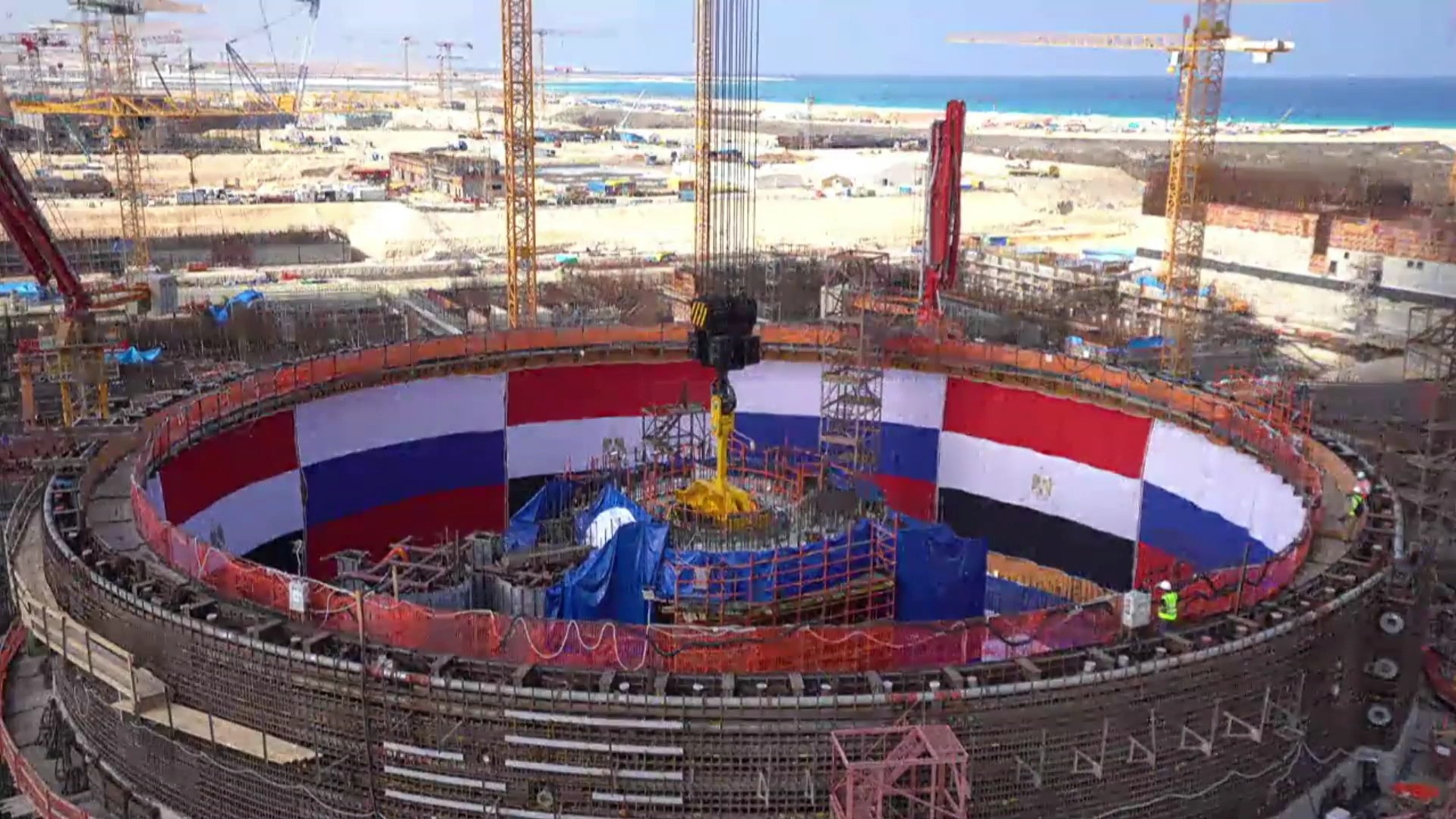
Just days after Egyptian nuclear authorities reportedly accused Rosatom of construction defects, poor management and vi...
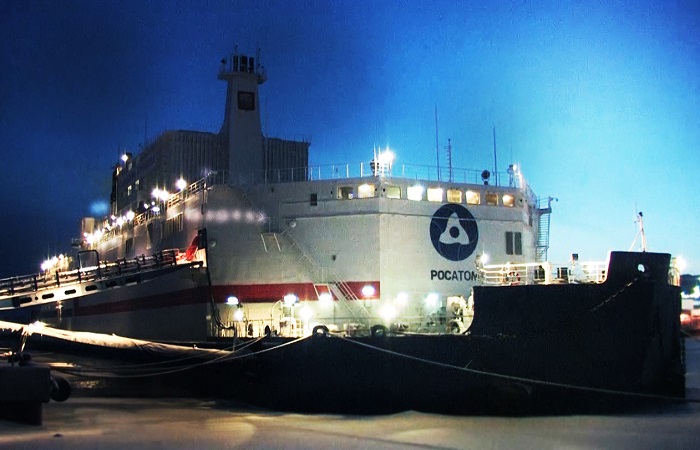
For years, the Akademik Lomonosov looked like one of the nuclear industry’s more eccentric experiments: two reactors mounted on a barge and tow...