
Germany wants independence from Russian nuclear fuel, using Rosatom as a bridge
Europe’s effort to break its dependence on Russian nuclear fuel has a paradox in Germany: making Russian-designed fuel without buying it from Russia ...
News

Publish date: December 23, 2025
Written by: Nikita Petrov, Charles Digges
News
What began as a necessary relocation for us has become a new operational base from which our team monitors some of the most acute security and environmental risks facing Europe today.
In 2025, Bellona remained focused on two core areas that define its mission: observing and analyzing the policy, economics, and trends within nuclear industry events in Russia and Ukraine, and documenting the rapidly deteriorating situation in the Russian Arctic. Over the course of the year, we published four in-depth analytical reports, 22 nuclear and Arctic digests, and 38 articles in Russian and English, examining issues ranging from the Zaporizhzhia Nuclear Power Plant and the legacy of Chernobyl to Rosatom’s role in the war and the growing militarization of the Arctic.
Our work this year documented how nuclear infrastructure has become entangled with warfare, sanctions evasion, and geopolitical pressure, while long-standing environmental risks are being pushed further into the background. We analyzed Russia’s nuclear fuel exports, operational extensions for aging Soviet-era reactors, the erosion of nuclear waste governance, and the use of Arctic territories as both an experimental weapons ground and a fragile transport corridor along the Northern Sea Route.
Below, we highlight the key developments and findings from 2025 across both areas of work. Together, they reflect not only the scale of the challenges ahead, but also Bellona’s continued role—three years on in Vilnius—as a trusted source of independent analysis for journalists, experts, policymakers, and the wider public seeking to understand nuclear risks, environmental threats, and their implications for regional and global security.
Throughout 2025, Bellona published analytical articles and news updates on the situation at the Zaporizhzhia Nuclear Power Plant—from power outages and blackouts to threats of restarting individual reactors and statements about who will control the plant in the future. We consistently emphasized that reliable safety oversight is impossible while the plant remains under occupation by Russian forces, and that ongoing hostilities in the area significantly increase the risk of a nuclear accident.
We also analyzed the work of the IAEA and raised questions about the need to reassess the international nuclear safety framework.
Following an incident in which a drone struck the protective structure of the Chernobyl Nuclear Power Plant, Bellona published several materials highlighting that its protective shell was not designed to withstand military threats. We continue to point out the high vulnerability of radiation-hazardous facilities in the exclusion zone and the urgent need to strengthen international oversight of safety in this area.

We analyzed Rosatom’s plans to extend the operating life of several RBMK reactors in Russia, including units at the Leningrad Nuclear Power Plant. Our experts believe this increases risks, as these installations are technologically outdated. In addition, their graphite moderators—irradiated with carbon-14—pose a critical challenge for future decommissioning, as the decay of such materials can take up to 5,730 years, adding to Russia’s already vast nuclear legacy.
Toward the end of the year, we released a report on the state and prospects of nuclear legacy cleanup in Russia. Our conclusion: the system for managing nuclear legacy is deteriorating, while accumulated risks—from aging nuclear power plants to sunken objects and radioactive waste—remain without adequate oversight, funding, or a sustainable long-term strategy.
We closely covered and commented on adjustments in U.S. and European policies regarding imports of Russian uranium, analyzing how sanctions and market redistribution affect Rosatom, Europe’s nuclear energy sector, and global dependence on Russian enrichment technologies—for example, on the African continent.
Rosatom began reorienting its operations toward the Kremlin’s military demands as early as 2022, initiating the development of components for non-nuclear weapons and other military technologies. Neither strict sanctions—which the corporation continues to successfully circumvent—nor partial loss of access to Western markets have halted this activity.
In our work, we analyzed the state of the corporation, including its role in Russia’s invasion of Ukraine, its position in the Russian economy, and its place in the global energy market.
In the spring, a thematic Bellona Forum was held, at which a major report on the transformation of Russia’s nuclear industry was presented. At the forum, we called on the international community to boycott the Russian nuclear industry, emphasizing its key role in financing the war and advancing foreign policies that are destructive to both people and the environment.

At the same time, our experts felt the long arm of Kremlin repression when Yury Sergeev, our Vilnius office administrative manager and Arctic advisor, was found guilty by Russian authorities for violating the country’s sweeping law on “undesirable organizations”—despite having lived outside Russia since 2022. This law makes it illegal for Russian citizens to associate with organizations deemed “undesirable” by Russian authorities, which Bellona has been named since early days of Moscow’s invasion of Ukraine. Though Bellona rejects the ruling, it nonetheless shows the lengths to which the Kremlin will go to avenge its critics.
Throughout the year, Bellona published materials on the risks associated with sunken and submerged submarines, reactor compartments, radioactive waste storage sites, and military infrastructure in the Arctic. We once again stressed that the war has deprived the region of international assistance programs, while many long-standing projects to recover or secure radioactive waste have been frozen. The Arctic is increasingly turning into a testing ground for new lethal weapons, with high risks of radionuclide contamination.
Bellona published analytical materials explaining why the Northern Sea Route (NSR) is a high-risk zone due to Russia’s aggressive Arctic policy, harsh climatic conditions, inadequate search-and-rescue infrastructure, and the likelihood of major accidents during oil and LNG transport by the shadow fleet. While the number of oil tankers belonging to the shadow fleet operating along the NSR increased fivefold over the year, Russia lacks the resources needed to respond effectively to major accidents in the region. Our report was presented by our experts online.

Russia’s plans to develop Arctic territories and expand the Northern Sea Route intensified even before the full-scale invasion of Ukraine and have not been scaled back despite nearly four years of war and international sanctions. Our new report summarizes publicly available information on the NSR and assesses the environmental and political risks associated with increased shipping.
In the autumn, Bellona sent an open letter to European governments and ports, urging them to refuse entry to Chinese vessels transiting the Northern Sea Route. Our argument was that the NSR is becoming not only an environmental threat, but also a means of increasing Russia’s economic and political influence, financing its military-industrial complex, and enabling intelligence-gathering and subversive activities.
A separate letter was sent to ministers of the parties to the OSPAR Convention (Convention for the Protection of the Marine Environment of the North-East Atlantic), in which we joined an open letter from the Seas At Risk association calling for an immediate halt to the discharge of toxic scrubber waste into marine waters.
At the Arctic Frontiers conference, Bellona experts hosted an event on the situation in the Russian Arctic during wartime. Discussions addressed security, environmental protection, climate change, and the growing militarization of the region. These debates help bring international attention to developments in the Arctic.

Our experts also participated in the Arctic Circle Assembly in Iceland, where we presented a report outlining the dangers of developing the Northern Sea Route. Chief among those, our report showed, is the increased traffic through the Arctic of old and shabby tankers flying compromised flags and lacking ice classification. Given the harsh climate of the Arctic, and the near total absence of effective emergency response along the Northern Sea Route, we argued, the increased traffic of such vessels through the fragile environment of the Arctic represents an ecological disaster in waiting.
Today, journalists from leading media outlets and experts from analytical centers turn to us when seeking to understand developments in nuclear safety, Russian nuclear industry or the Russian Arctic. Over the past year, our collaboration with journalists helped bring our analysis to audiences of 30 different media outlets with a combined readership of several million people. This included print interviews, articles, our own publications on external platforms, podcast discussions, and YouTube appearances.
Among others, we would like to highlight Politiken, The Moscow Times, The Washington Post, L’Express, The Independent, MLex, The Barents Observer, and NRC.
Our materials were cited by 88 outlets, including Contexte, The New Voice of Ukraine, Arctic Today, and The Insider. Our analysis was also used in 17 academic and expert publications and digests such as those at The Stimson Center, Russia Matters, The Jamestown Foundation, and the U.S. Naval Institute. The combined audience of our publications consists of hundreds of thousands of English- and Russian-speaking readers across Europe and Ukraine, most of whom are engaged in political, economic, and analytical work related to national security, risk forecasting, and environmental protection.
Our nuclear and Arctic digests are read monthly by more than 400+ experts, including staff from NGOs, universities, intelligence services, analytical centers, advisors, and officials from Western governments.
Over the past year, we held six presentation events with a combined audience of more than 300 experts, as well as numerous meetings with stakeholders interested in the issues covered by Bellona.
Bellona will continue to analyze information and publish articles and reports on environmental problems in the Russian Arctic, as well as to closely observe the activities of Rosatom both at home and abroad. We are also considering the launch of a dedicated project to counter climate and environmental disinformation originating from Russia. We remain committed to defending the public’s right to access reliable information about the state of the environment.
The organization maintains a presence on major social media platforms—X, LinkedIn, Telegram, and YouTube—and distributes English-language email newsletters, which you can subscribe to them here.
Europe’s effort to break its dependence on Russian nuclear fuel has a paradox in Germany: making Russian-designed fuel without buying it from Russia ...
Nearly four and a half years after Russia’s full-scale invasion of Ukraine, July offered fresh evidence of how difficult it remains to disentangle Ru...
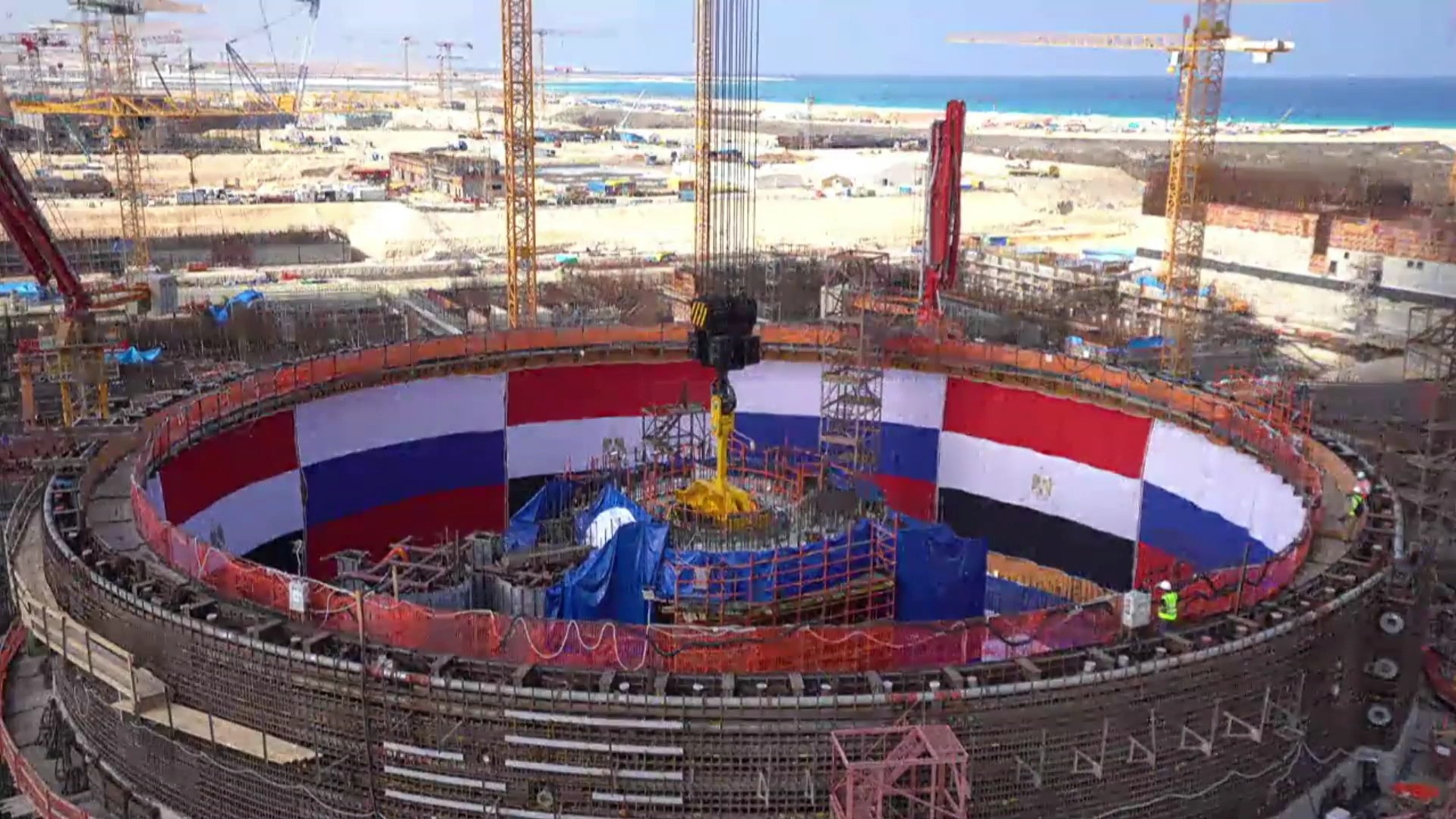
Just days after Egyptian nuclear authorities reportedly accused Rosatom of construction defects, poor management and vi...
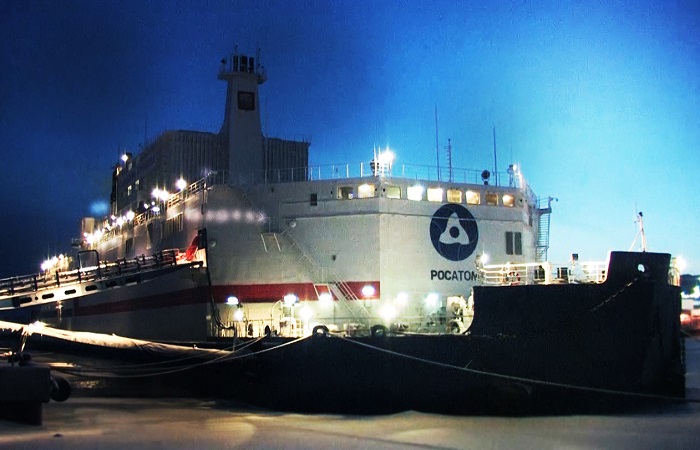
For years, the Akademik Lomonosov looked like one of the nuclear industry’s more eccentric experiments: two reactors mounted on a barge and tow...