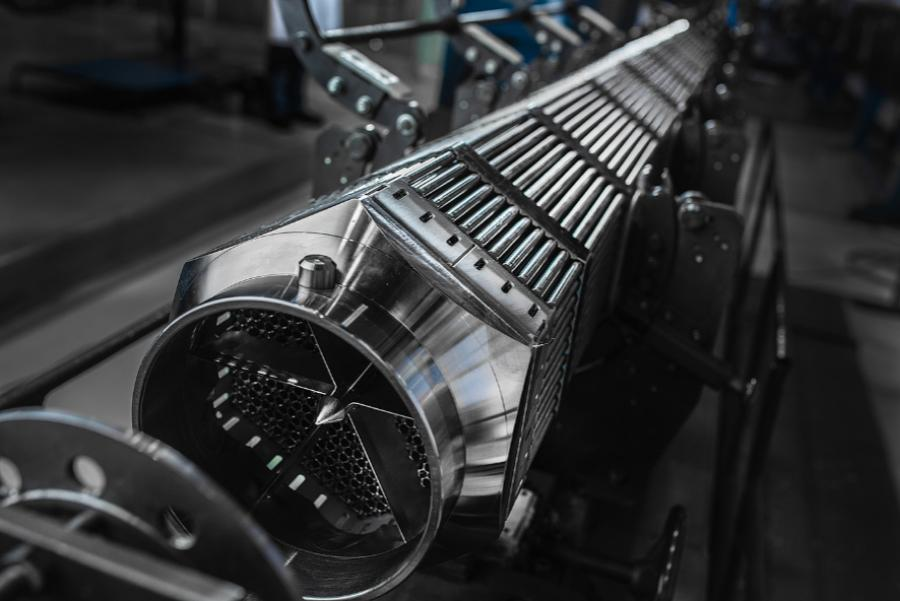
Germany wants independence from Russian nuclear fuel, using Rosatom as a bridge
Europe’s effort to break its dependence on Russian nuclear fuel has a paradox in Germany: making Russian-designed fuel without buying it from Russia ...
News
Publish date: April 7, 1997
Written by: Igor Kudrik
News
Swedish Nuclear Fuel and Waste Management Company (SKB), in co-operation with Norwegian Kvaerner Moss Technology, British Nuclear Fuel and French SGN, is establishing a private enterprise to deliver an intermediate storage facility for spent nuclear fuel on the Kola peninsula. By the end of April, SKB will have submitted the project description to the Swedish Foreign Ministry, which is expected to finance the initial stage of the project.
SKB is jointly owned by the four nuclear electricity producing companies which co-ordinates the planning, construction and operation of storage systems for Swedish spent nuclear fuel and radioactive waste.
Sweden has already allocated 50 million SEK to different projects aimed at diminishing the risks emanating from the ageing nuclear power plants and other reactor installations in Eastern Europe. Now the Swedish Foreign Ministry is expected to allocate an additional 10 million SEK to the storage project on Kola.
-This is pocket money, said the director of special operations at SKB Bo Gustavsson, who has been in charge of negotiations with the Ministry of Atomic Energy of Russia, to Swedish media. –But it is a step in the right direction, he added.
-The whole project will require billions of SEK, so for the future we are planning to apply to the Commission of the European Union, and to other financial organisations like the European Reconstruction and Development Bank, for financial support, said Mr. Gustavsson.
Currently, nuclear fuel spent at the Northern Fleet, Murmansk Shipping Company and Kola Nuclear Power Plant is shipped from the Kola Peninsula to the Mayak plant in Siberia for reprocessing. Due to technical problems and lack of financing, shipments of spent fuel has been severly reduced in the course of the last years. As a result, spent fuel is accumulating in unsecured onshore storage facilities and onboard the servicing boats of the Northern Fleet and Murmansk Shipping Company. The need for an intermediate storage facility in the region has been a subject of debate for several years. Hopefully, the Swedish initiative will lead to a viable solution to the problem.
Various Swedish media, March 1997
Rossiyskaya Gazeta, 1997-03-13
Berkhout F., Radioactive Waste: Politics and Technology, London – New York, 1991
Europe’s effort to break its dependence on Russian nuclear fuel has a paradox in Germany: making Russian-designed fuel without buying it from Russia ...
Nearly four and a half years after Russia’s full-scale invasion of Ukraine, July offered fresh evidence of how difficult it remains to disentangle Ru...

Just days after Egyptian nuclear authorities reportedly accused Rosatom of construction defects, poor management and vi...
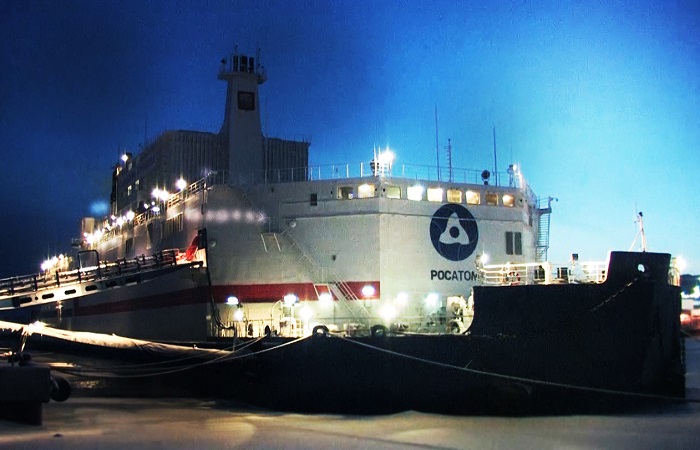
For years, the Akademik Lomonosov looked like one of the nuclear industry’s more eccentric experiments: two reactors mounted on a barge and tow...