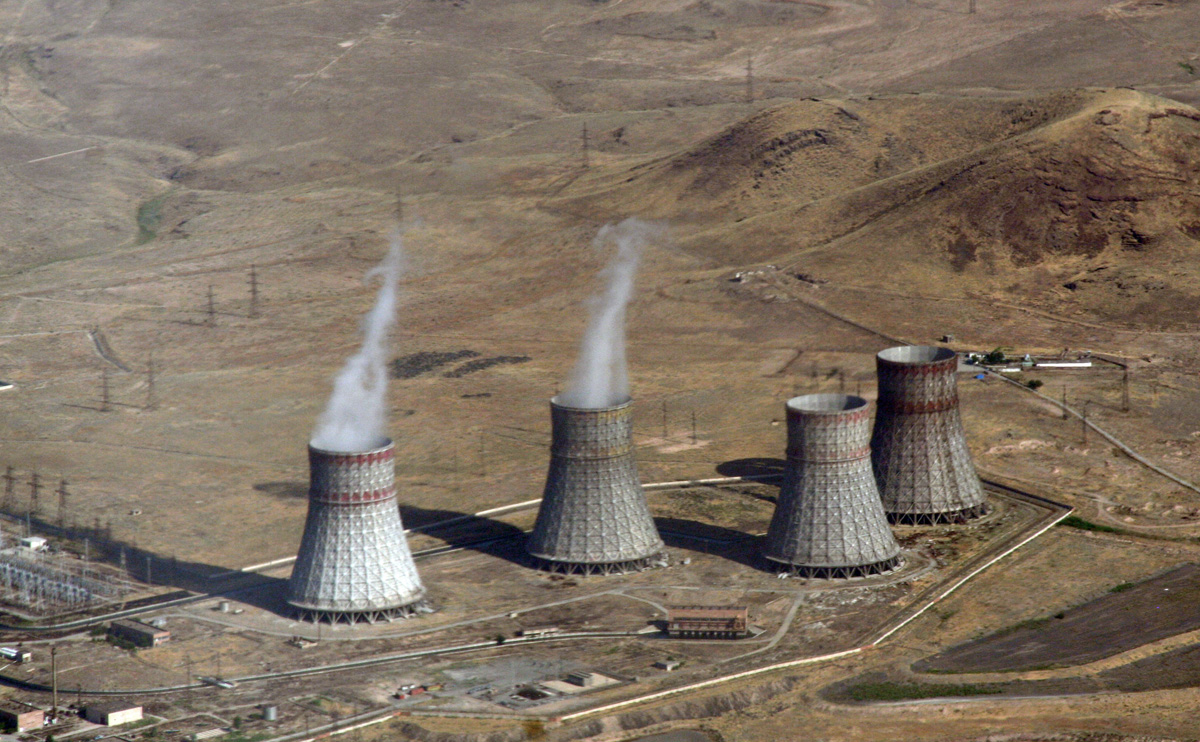
Armenia reconsiders nuclear future as Rosatom offers replacement for aging Soviet reactor
Armenia is reconsidering its plans for a new nuclear power plant after a fresh proposal from Russia’s state nuclear corporation Rosatom and a s...
News
Publish date: June 20, 2003
News
Solid waste is sorted by radiation level and divided into categories of “flammable” and “inflammable”. At Atomflot there is a flammable solid waste destruction facility with a capacity of 40 t/y. The facility allows for a reduction in volume of the solid waste by a factor of 80. The gases, which are produced in the process are specially filtered. Up to the present day, more than 350m3 of flammable solid waste has been processed using that installation.
Non-flammable solid waste, spent filter materials, and contaminated equipment are stored in special rooms and on
the temporary storage sites at Atomflot, as well as on the service ship Volodarsky. All production sectors of Atomflot entailing work with contaminated equipment are equipped with an air cleaning system from radioactive aerosols.
Liquid waste is transferred for processing at a pilot plant. Radioactive water is passed through a series of filters whereby the content of radionuclides is reduced to an acceptable concentration. The water is then bio-cleaned in the general cleaning system and released into the Kola Bay.
Armenia is reconsidering its plans for a new nuclear power plant after a fresh proposal from Russia’s state nuclear corporation Rosatom and a s...

Russia’s state nuclear corporation Rosatom has taken full control of one of the country’s largest logistics companies, consolidating an expanding tra...
August brought signs of growing pressure on several fronts for Russia’s state nuclear corporation Rosatom, from questions surrounding major construct...

The International Atomic Energy Agency has suspended one of its most senior Russian officials — but for reasons largely unrelated to the questions ab...