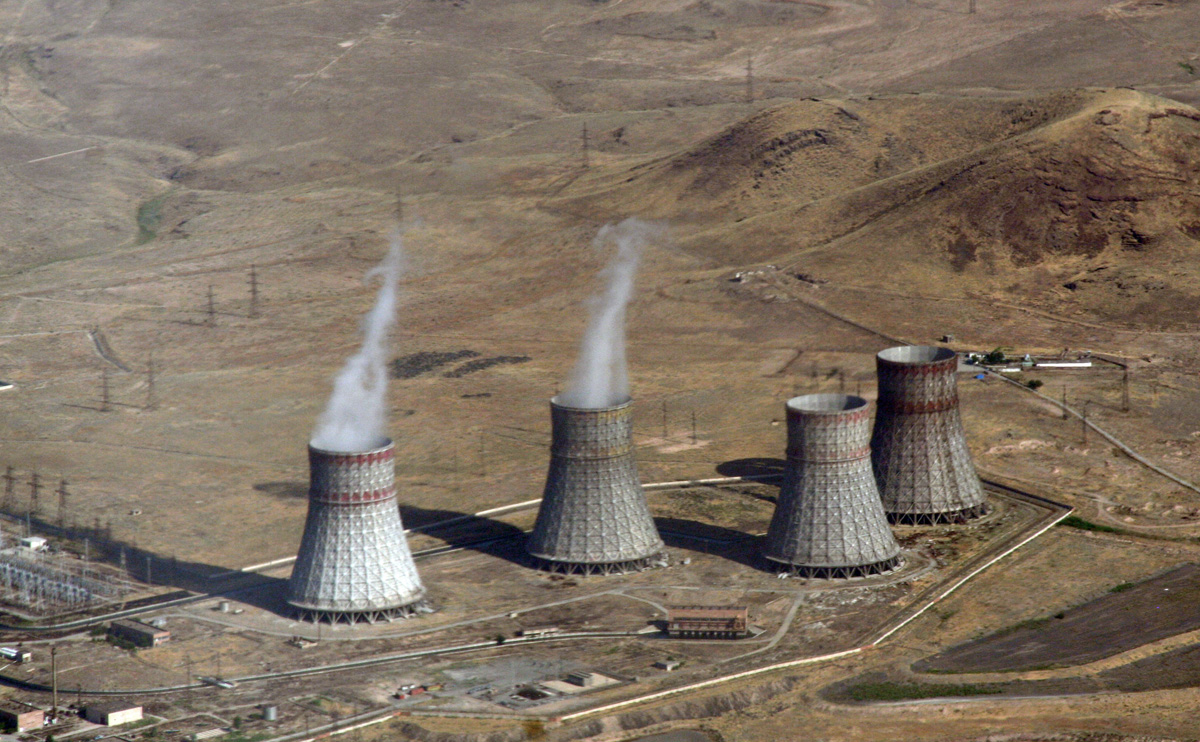
Armenia reconsiders nuclear future as Rosatom offers replacement for aging Soviet reactor
Armenia is reconsidering its plans for a new nuclear power plant after a fresh proposal from Russia’s state nuclear corporation Rosatom and a s...
News
Publish date: March 11, 2004
News
On February 16-20, the meetings of the joint Russian-German managing and technical councils of the project on safe handling of reactor compartments from the retired submarines was held in Germany, Nuclear.ru was told by Victor Akhunov, Minatom’s departmental head for the decommissioning of nuclear installations in Russia. The project is being implemented according to the agreement signed in October 2003.
According to Akhunov, the project consists of 3 parts. The first part is preparation of the compartments for long storage and their preservation. Shipyard Nerpa has the entire necessary infrastructure for these operations. The second part is transportation. It was decided to transport the reactor compartments ready for conservation to the storage facility by the floating dock PD-42. And the third part is creating infrastructure of the onshore storage facility. Reactors can be stored there for 70 years. Shipyard Nerpa, the Kurchatov Russian Science Centre and German Company Energiewerke Nord GmbH will manage the project.
According to the construction schedule approved at the meeting, the first reactor compartments should be placed in the onshore facility already in 2005, but the site is to be completed in 2007. The contracts for some works in 2004 should be signed by March 21. They will deal with site exploration in Sayda bay and technical documentation. «We hope that already in June this year we can have ground breaking ceremony of the facility» Akhunov said to Nuclear.ru.
Armenia is reconsidering its plans for a new nuclear power plant after a fresh proposal from Russia’s state nuclear corporation Rosatom and a s...

Russia’s state nuclear corporation Rosatom has taken full control of one of the country’s largest logistics companies, consolidating an expanding tra...
August brought signs of growing pressure on several fronts for Russia’s state nuclear corporation Rosatom, from questions surrounding major construct...
The International Atomic Energy Agency has suspended one of its most senior Russian officials — but for reasons largely unrelated to the questions ab...