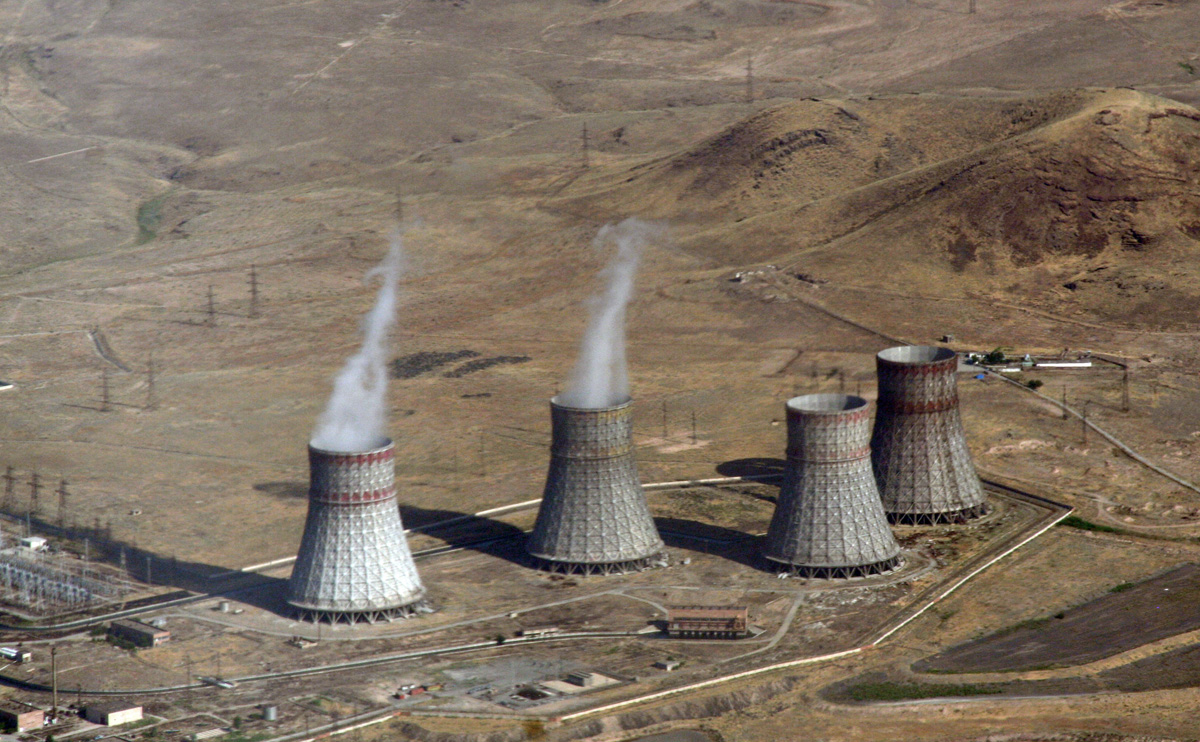
Armenia reconsiders nuclear future as Rosatom offers replacement for aging Soviet reactor
Armenia is reconsidering its plans for a new nuclear power plant after a fresh proposal from Russia’s state nuclear corporation Rosatom and a s...
News
Publish date: March 22, 1999
Written by: Igor Kudrik
News
Vladimir Kuroedov, Commander-in-Chief of the Russian Navy, said the nuclear-powered cruiser Admiral Ushakov won’t be decommissioned, Interfax reported.
The announcement reversed a 1998 decision to pull the 20-year-old cruiser out of service because of a lack of funds needed to effect repairs.
Kuroedov’s decision was prompted by an appeal from the Duma to the government. In early January 1999, Duma members criticised the decision to pull the cruiser out of service and asked the government to fund the repairs.
Mikhail Barsukov, Deputy Commander-in-Chief of the Russian Navy, told Interfax that Kirov-class ships are designed for service of between 35 and 40 years, adding, that they have to be overhauled every 10 years. Otherwise they could expect to see another 15 to20 years of life.
Admiral Ushakov was the first of its class and its systems require an upgrade. In total, around $130 million must be spent to make the cruiser operational and the money is not in the budget for 1999.
The Russian Navy has three Kirov-class nuclear-powered battle cruisers in the Northern Fleet: Admiral Ushakov, Admiral Nakhimov and Peter the Great. The third entered service in March 1998. A fourth battle cruiser of this class, the Admiral Lazarev, operates with the Pacific Fleet. All are powered by two PWR-type nuclear reactors.
Russia-wide cash collection
Mordovian, Murmansk and Arkhangels counties recently established a fund to collect cash to repair the cruiser. The government of Mordovia allotted $43,000 – 3.3 per cent of the sum required.
Admiral Ushakov has been out of active service since 1990, idling away the decade at its home port of Severomorsk in the Kola Peninsula. It was laid up due to problems reportedly related to the boat’s turbine generators. Kirov class ships also suffer from the lack of a proper service infrastructure, particularly regarding the refuelling of their reactors.
Armenia is reconsidering its plans for a new nuclear power plant after a fresh proposal from Russia’s state nuclear corporation Rosatom and a s...

Russia’s state nuclear corporation Rosatom has taken full control of one of the country’s largest logistics companies, consolidating an expanding tra...

August brought signs of growing pressure on several fronts for Russia’s state nuclear corporation Rosatom, from questions surrounding major construct...
The International Atomic Energy Agency has suspended one of its most senior Russian officials — but for reasons largely unrelated to the questions ab...