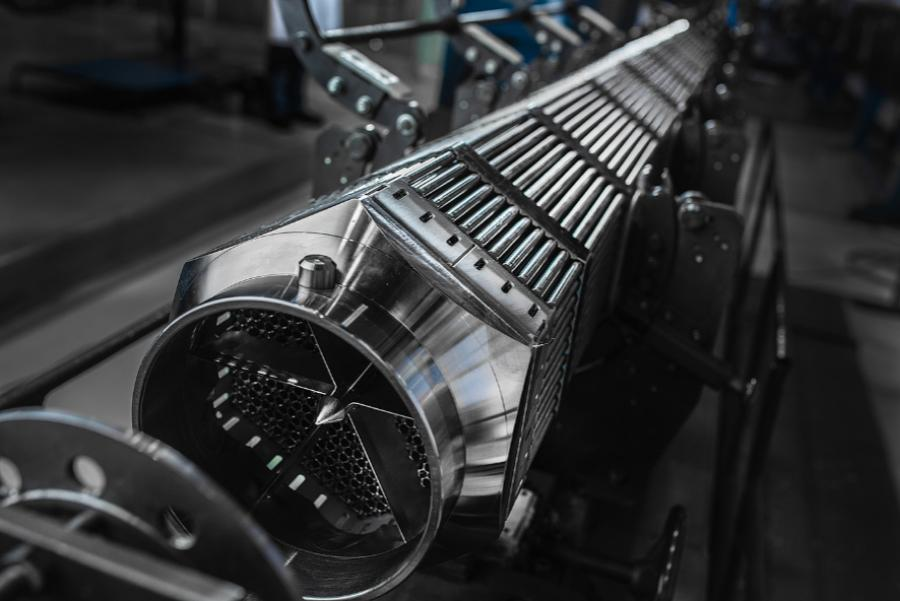
Germany wants independence from Russian nuclear fuel, using Rosatom as a bridge
Europe’s effort to break its dependence on Russian nuclear fuel has a paradox in Germany: making Russian-designed fuel without buying it from Russia ...
News
Publish date: February 14, 2005
News
The United States National Nuclear Security Administration (NNSA) and the United Kingdom’s Trade and Industry Ministry signed on January 27 a Memorandum of Understanding (MOU) to assist the permanent shutdown of the final operating weapons grade plutonium production reactor in the closed nuclear city of Zheleznogorsk, Russia, US Newswire reported.
Under this MOU the United Kingdom will contribute $20M to NNSA’s Elimination of Weapons Grade Plutonium Production Program (EWGPP). NNSA Assistant Deputy Administrator for Defense Nuclear Nonproliferation James Turner signed the MOU with the United Kingdom’s Minister of Trade and Industry Nigel Griffiths. The governments of the United Kingdom and the United States are supporting the shutdown of the Zheleznogorsk plutonium production reactor as part of their commitment to the G8 Global Partnership.
The EWGPP will result in the permanent shutdown of three Russian nuclear reactors, which currently produce weapons-grade plutonium. These reactors, which are the last three reactors in Russia that produce plutonium that could be used for military purposes, also provide necessary heat and electricity to two regions in Siberia. In order to meet these energy requirements, the EWGPP will provide support to the Russian Federation for provision of replacement fossil energy plants. The Russians have agreed to permanently shut down the reactors once replacement energy is provided.
Europe’s effort to break its dependence on Russian nuclear fuel has a paradox in Germany: making Russian-designed fuel without buying it from Russia ...
Nearly four and a half years after Russia’s full-scale invasion of Ukraine, July offered fresh evidence of how difficult it remains to disentangle Ru...

Just days after Egyptian nuclear authorities reportedly accused Rosatom of construction defects, poor management and vi...
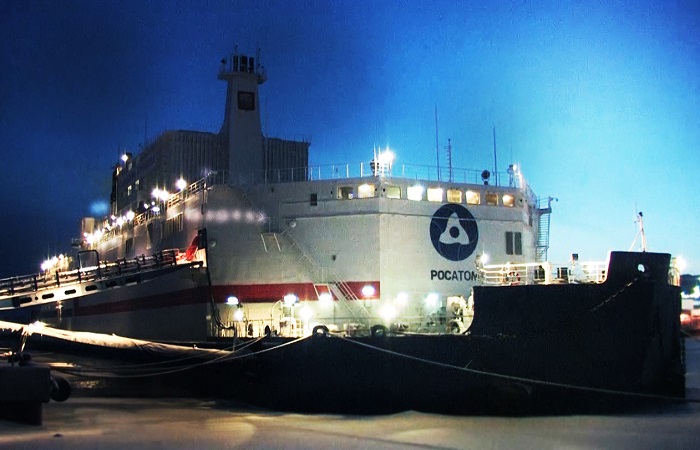
For years, the Akademik Lomonosov looked like one of the nuclear industry’s more eccentric experiments: two reactors mounted on a barge and tow...