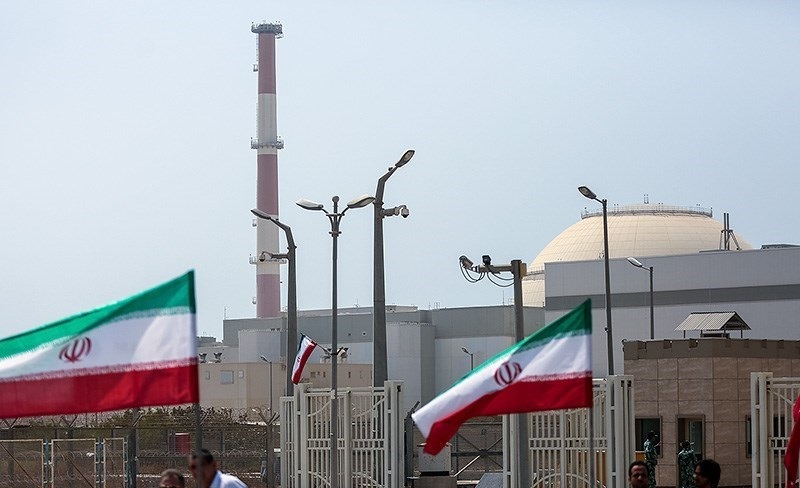
Another Russia-Linked Nuclear Power Plant Is at Risk From War. This Time, in Iran
Over the past four years, civilian nuclear energy facilities have increasingly become targets of direct or indirect attacks in armed conflicts. The Z...
News

Publish date: February 25, 2013
Written by: Sirin Engen
News
Bellona President Frederic Hauge celebrates the news; «Norcem in Brevik is the first cement producer in Europe, and maybe the world, that has the opportunity to become carbon negative, i.e. removing more CO2 from the atmosphere than it emits in its production of cement. If we are to overcome the challenges that climate change presents, this type of technology is key”.
In 2008, the Bellona Foundation released the internationally renowned research report “How to Combat Global Warming”. The report proved how sustainable production of bio mass combined with CO2 capture and storage (CCS) is a key technology in the global fight against climate change. In the summer 2012, the EU’s technology platforms for CO2 handling (ZEP) and bio-fuels (EBTP) followed with a report that showed possible concepts for combining these technologies. Bellona was the main-contributor to this report, which demonstrates how CCS in the cement industry, combined with the transition from coal to bio-based fuels, can be one possible solution.
“Norcem in Brevik is on the forefront when it comes to biomass and alternative fuels, so we are very pleased that they will now also become world-leading in CCS. Imagine if Norway through this initiative could become the first country in the world that develops carbon-negative cement! This is really something to be proud of and it could potentially be a vital contribution to combating climate change. Thus, this has the potential to attract significant international attention, and Bellona will do its best to promote the project in Brevik in our wide environmental network in a number of European countries”, says Hauge, who is also vice-chairman of ZEP.
“CCS is the only technology that can reduce emissions from cement production in the order of magnitude that would be required to achieve the UN’s (and the EU’s) climate goals for the coming decade. This can be regarded as a victory for Norwegian technology and for the entire Norwegian manufacturing industry”, says Hauge.
Hauge underlines that forcing European manufacturing industry to relocate to parts of the world without CO2 pricing or other similar climate policies will not benefit climate change mitigation. “The cement industry is one of the few industry branches left in the country. Norcem in Brevik is the only company within its sector in Norway actively pursuing a breakthrough in CCS”, Hauge concludes.
Over the past four years, civilian nuclear energy facilities have increasingly become targets of direct or indirect attacks in armed conflicts. The Z...

A new ISO standard was published last week to help port authorities, shipowners and operators navigate rules on how ships should be cleaned in an env...
Russia’s state nuclear corporation Rosatom reported what it called solid overall results for 2025, but new figures suggest that the company’s once-ra...

The following op-ed by Eivind Berstad, Bellona’s CCS team leader, originally appeared in Teknisk Ukbladet. When the European Free Trade Associatio...