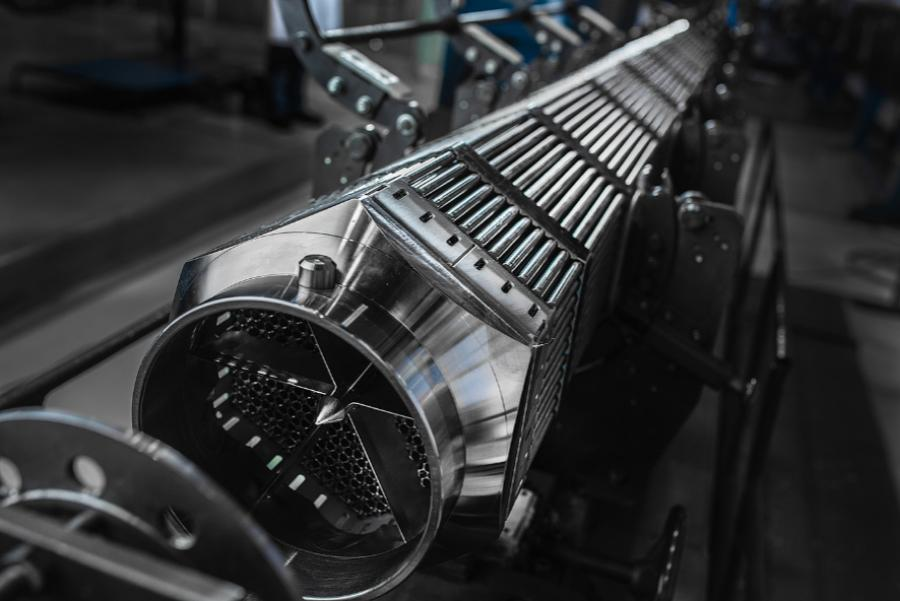
Germany wants independence from Russian nuclear fuel, using Rosatom as a bridge
Europe’s effort to break its dependence on Russian nuclear fuel has a paradox in Germany: making Russian-designed fuel without buying it from Russia ...
News
Publish date: March 3, 2015
News
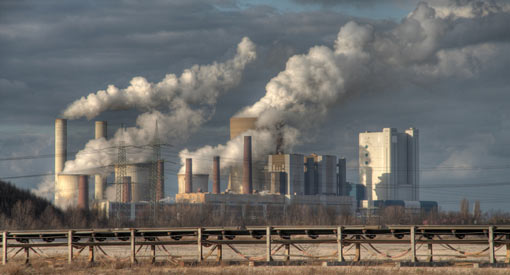
While China’s climate change commitments and achievements with regards to uptake in renewables are to be commended, the latest report from China’s National Energy Administration shows that coal power plant capacity has continued expanding throughout 2014.
In fact, the report shows that the amount of new coal energy added to the Chinese grid last year exceeded new solar energy by 17 times, new wind energy by more than 4 times, and even new hydro by more than 3 times.
At first sight, these findings seem to be in contradiction with other recent reports which state that the total coal use in China fell in 2014 for the first time by about 2.5%. However, these trends are not inconsistent. Half of China’s coal use takes place outside of the power sector, in particular in heavy industries, which have reduced their coal use as exports fell in 2014 and the government introduced policies to withdraw subsidies to heavy industry. Moreover, the overall demand growth in the power sector reached a decade low but is expected to resume. These short-term developments, however, do not undermine the general trend of continued uptake in coal deployment in China’s power sector, which represents a growing share of China’s energy use.
The sustained growth in coal power plants leaves a heavy footprint on the earth climate, which even a peak in CO2 emissions by 2030 cannot compensate for. Consequently, China will have no choice but to ensure new and existing coal and gas power plants are equipped with CCS technology. CCS is the only available technology that can achieve sufficiently deep emission reductions in some energy-intensive sectors.
Alongside their commitments to undertaking ambitious emission cuts, the US and China announced plans to enhance cooperation in the field of CCS and to undertake a major project with enhanced water recovery in China. The materialisation of this project would form an important component of a business case for moving CCS forward in China as well as globally.
Europe’s effort to break its dependence on Russian nuclear fuel has a paradox in Germany: making Russian-designed fuel without buying it from Russia ...
Nearly four and a half years after Russia’s full-scale invasion of Ukraine, July offered fresh evidence of how difficult it remains to disentangle Ru...

Just days after Egyptian nuclear authorities reportedly accused Rosatom of construction defects, poor management and vi...

For years, the Akademik Lomonosov looked like one of the nuclear industry’s more eccentric experiments: two reactors mounted on a barge and tow...