Russian nuclear ties persist in the West as war claims another life at Zaporizhzhia
Nearly four and a half years after Russia’s full-scale invasion of Ukraine, July offered fresh evidence of how difficult it remains to disentangle Ru...
News

Publish date: April 28, 2014
News
The sales are a part of the NER300 programme, which is a financing instrument managed jointly by the European Commission, the European Investment Bank and the Member States. The aim of NER300 is to establish a demonstration programme comprising the best possible CCS and renewable energy projects and involving all EU and EEA Member States.
The NER300 programme has struggled to fulfil its original objective of funding CO2 capture and storage (CCS) demonstration projects in Europe. Read about how the first round of NER300 failed to fund a single CCS project here, how only one CCS project (White Rose in the UK) was submitted to the second round here, and read about a European Parliament hearing on the NER300 here. At this hearing the European Commission admitted shortcomings, in particular inflexibility, in managing to secure a CCS demonstration with the NER300.
“The European Investment Bank is pleased to support future investment in low-carbon demonstration projects. Successful completion of monetisation of carbon allowances under the NER300 scheme will help both carbon capture and storage schemes and innovative renewable energy projects across Europe reach a commercial scale. We will continue to work closely with the European Commission to ensure that the best applicants can be awarded proceeds raised from the ground-breaking NER 300 scheme.” said Jonathan Taylor, European Investment Bank Vice President.
“The NER300 is a new path taken a few years ago to support large scale demonstration projects. We will need more of this type of innovation support in the transition to a low-carbon economy. I am glad that the European Investment Bank has joined us in this innovative work and I commend them for having done an excellent job in monetising allowances.” said Jos Delbeke, Director General for Climate Action, European Commission.
For the second phase a total of 33 project applications were received by the European Investment Bank by July 2013 and these have since been examined in detail. The European Commission is expected to announce details of awards to successful projects later this year. Word has it that the White Rose CCS project in the UK will be among the funded projects.
NER300 has enjoyed somewhat limited success, as the EU Emissions Trading System has not generated the CO2 price of €15 per tonne that was expected when the programme was set up in 2010. Consequently, the sales of emission allowances have raised considerably less revenue than envisaged. Prices averaged €8.05 and €5.48 per tonne in the first and second phases, respectively. Moreover, the programme has been criticised for pushing emissions allowances into a market that already is oversupplied.
Bellona welcomes the new funding and hopes that it will contribute to the impetus that CCS deployment in Europe currently needs. Following the recent third interim report of the IPCC, wherein the importance of CCS is emphasised, this seems more imperative than ever.
Read the press release of the European Investment Bank here.
Nearly four and a half years after Russia’s full-scale invasion of Ukraine, July offered fresh evidence of how difficult it remains to disentangle Ru...
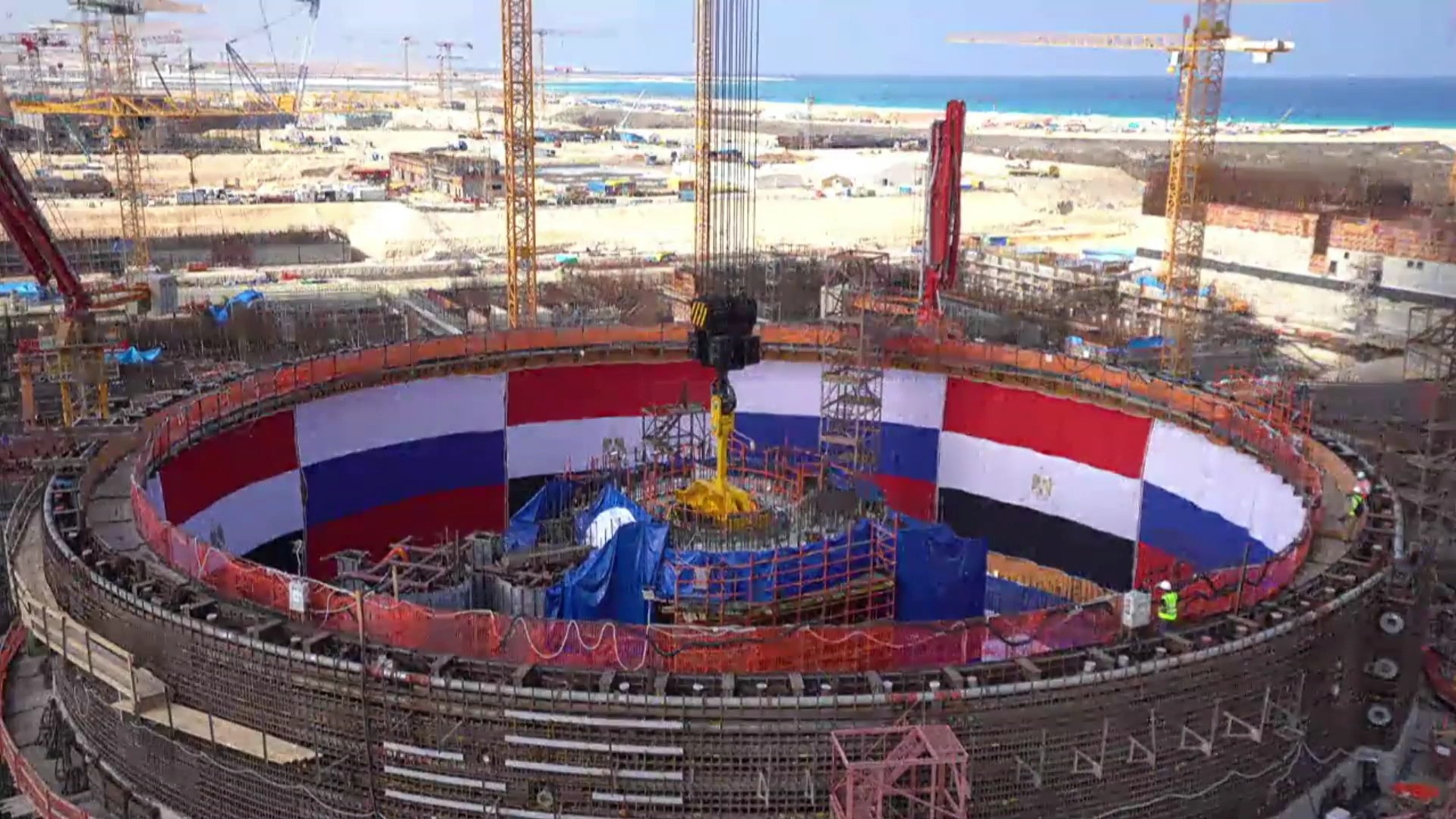
Just days after Egyptian nuclear authorities reportedly accused Rosatom of construction defects, poor management and vi...
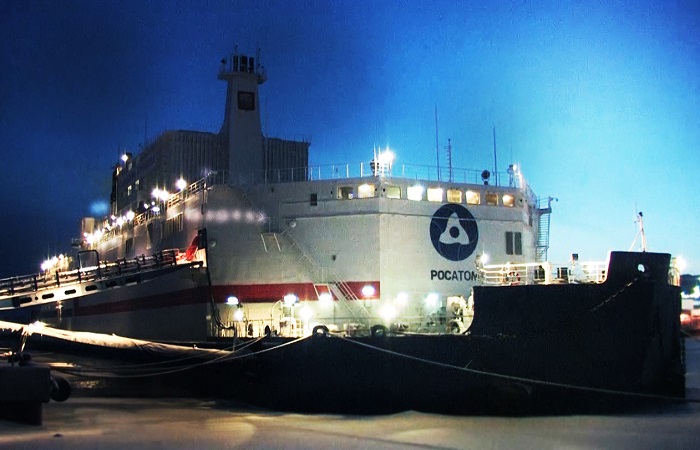
For years, the Akademik Lomonosov looked like one of the nuclear industry’s more eccentric experiments: two reactors mounted on a barge and tow...
Russia’s war against Ukraine continues to reshape the global nuclear industry in ways that extend beyond the battlefield. Western governments a...